Abstract:
Dravet syndrome is an autosomal dominant genetic disorder which causes a catastrophic form of epilepsy. It is characterized by prolonged febrile and non-febrile seizures within the first year of life,
which progress to other seizures, and psychomotor delay. In most cases, the mutations associated with the disease are not hereditary (nonsense mutations
in the SCN1A gene, which codifies for NaV1.1). Accordingly, non selective anticonvulsant sodium channel blockers are known to aggravate seizures and status epilepticus in Dravet patients.
Taking inspiration on recent success in the development of small molecules capable of selectively inhibiting the NaV1.7 subtype, we currently pursue the identification of highly selective NaV1.2 or NaV1.6
blockers that do not inhibit NaV1.1, as potential treatments for Dravet syndrome. For that purpose, machine learning models based on random subspace approximations, linear classifiers and ensemble learning,
have been developed using NaV1.2 and NaV1.6 as targets and NaV1.1 as antitarget. The models have been applied in retrospective virtual screening campaigns, with very good enrichment metrics, and are currently
applied complementary with structure-based approximations in the prospective virtual screening for new potential drug candidates against Dravet syndorme.
Short Bio:
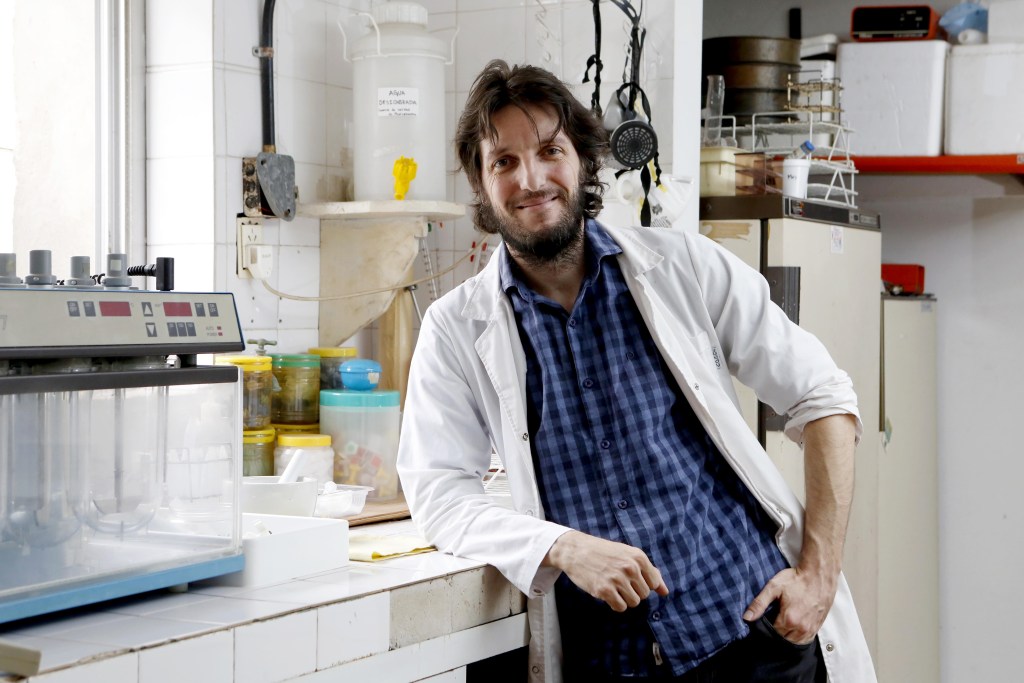
Prof. Alan Talevi was born in Buenos Aires, 1980. He obtained his Pharmacy degree in 2004 and completed his PhD studies in 2007, both at the University of La Plata (UNLP, Argentina). Among other recognitions,
he obtained the award for the best PhD thesis on Computational Chemistry from the Argentinean Chemical Society (2008), a Pacifichem Young Scholar Award (USA, 2010) and the Award to Scientific and Technological
Production from UNLP (2016). Since 2010, he holds a permanent position at the Argentinean Council of Scientific and Technical Research (CONICET), where he currently occupies an Independent Researcher position,
and since 2012 he is the professor in charge of the Biopharmacy/Pharmacokinetics course at the Faculty of Exact Sciences, UNLP. He has published over 70 articles in periodicals and more than 30 book chapters,
mostly in the fields of machine learning, drug discovery and biopharmacy. He was elected Head of the Department of Biological Sciences of the Faculty of Exact Sciences, UNLP, between 2015 and 2017. In 2018 he
became the Head of the Laboratory of Bioactive Research and Development (LIDeB, UNLP). External reviewer for several agencies and universities, including the Argentinean National Institute of Cancer,
Argentinean National Agency of Scientific and Technical Promotion, Argentinean Ministry of National Education, University of La República (Uruguay), University of Buenos Aires (Argentina), University of Córdoba (Argentina),
University of Mar del Plata (Argentina), the National Agency of Scientific and Technical Promotion (Uruguay), the United Nations University, the National Science Center (Poland) and the “Victor Babes” University of Medicine and Pharmacy (Romania),
CONCYTEC (Perú), and UK Research and Innovation (UK). Reviewer of more than 80 periodicals (https://publons.com/researcher/1667052/alan-talevi/), mostly in the fields of Cheminformatics, Drug Discovery, Drug Design and Pharmacology, including the Nature Communications,
Scientific Reports, Journal of Medicinal Chemistry, Journal of Chemical Information and Modelling, Journal of Molecular Graphics and Modelling, PLoS One, Expert Opinion on Drug Delivery, Expert Opinion on Drug Discovery, Expert Opinion on Drug Metabolism and Toxicology,
European Journal of Medicinal Chemistry, European Journal of Pharmacology, International Journal of Pharmaceutics, Journal of Pharmacy and Pharmacology. Outstanding reviewer of the European Journal of Medicinal Chemistry, European Journal of Pharmacology and Neuropharmacology,
among others. Member of the editorial board of the Latin American Journal of Pharmacy (from 2014 and continues) and the Journal of Pharmacy and Nutrition Sciences. Guest editor of Mini-Reviews in Medicinal Chemistry, Frontiers in Chemistry and Current Drug Safety.
Editor of the Antiepileptic Drug Discovery Novel Approaches volume of the Springer Protocols series (2016), and also of ADME Processes in Pharmaceutical Sciences Dosage, Design, and Pharmacotherapy Success (Springer, 2018). Chief Editor of the ADME Encyclopedia (Springer, 2021)
and of the incoming Springer Nature Computer-Aided Drug Discovery and Design series.